Japan is home to many forms of craftsmanship shaped by the landscapes in which they were born.
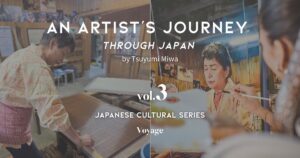
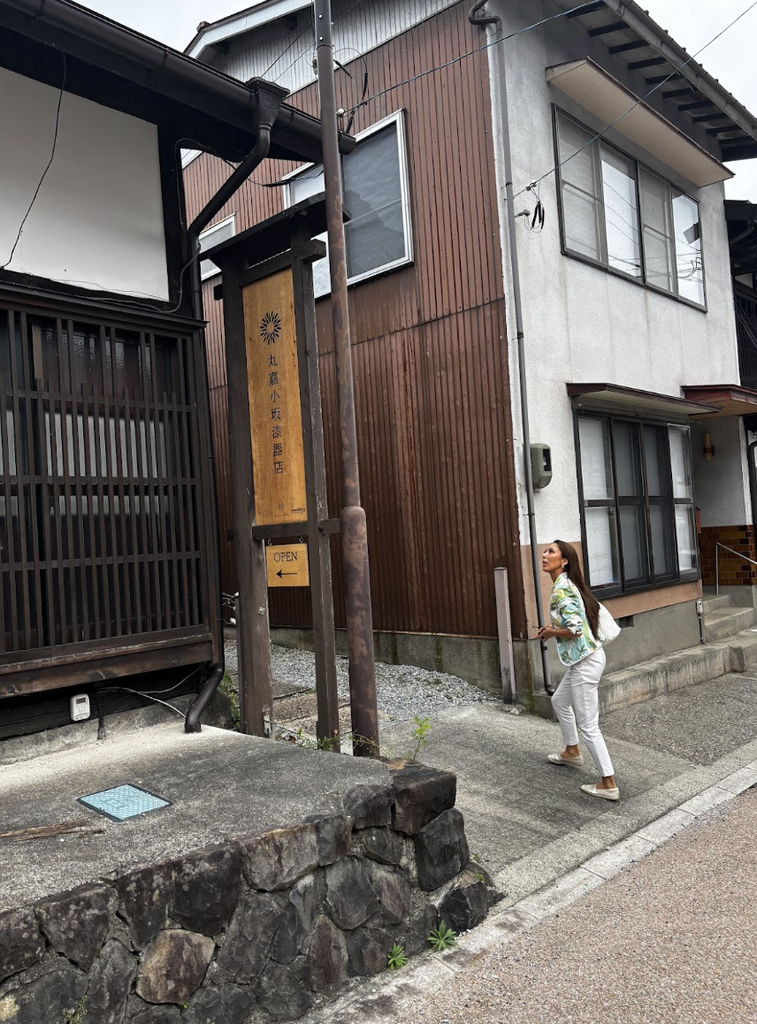
In this second chapter of An Artist’s Journey Through Japan, artist Tsuyumi Miwa travels to Kiso-Hirasawa in Nagano Prefecture, a mountain town surrounded by forests and renowned for its centuries-old tradition of lacquerware.
Here, wood, lacquer and generations of craftsmanship come together in objects made not simply to be admired, but to become part of everyday life.
This time, Miwa visits Maruyoshi Kosaka Lacquerware Workshop, where Reo Kosaka and Chie Kosaka carry this heritage forward while exploring new possibilities for one of Japan’s enduring traditional crafts.
Part 2: Kiso Lacquerware, Nagano — Where Wood, Lacquer and Light Meet
My second destination is Kiso-Hirasawa in Nagano Prefecture.Surrounded by mountains and abundant forests, Kiso is a place where the natural landscape has long shaped both the lives and livelihoods of its people.
The region’s rich timber resources provided the foundation for a thriving woodworking culture. Over generations, artisans transformed wood with layers of lacquer, creating objects of remarkable beauty and durability.
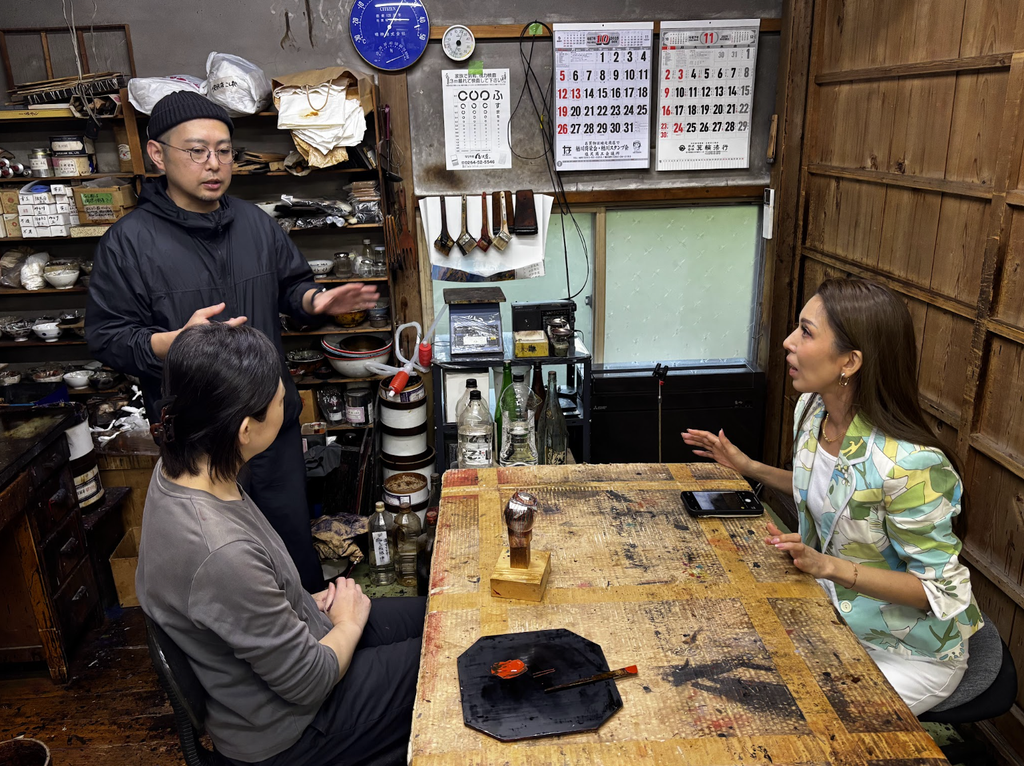
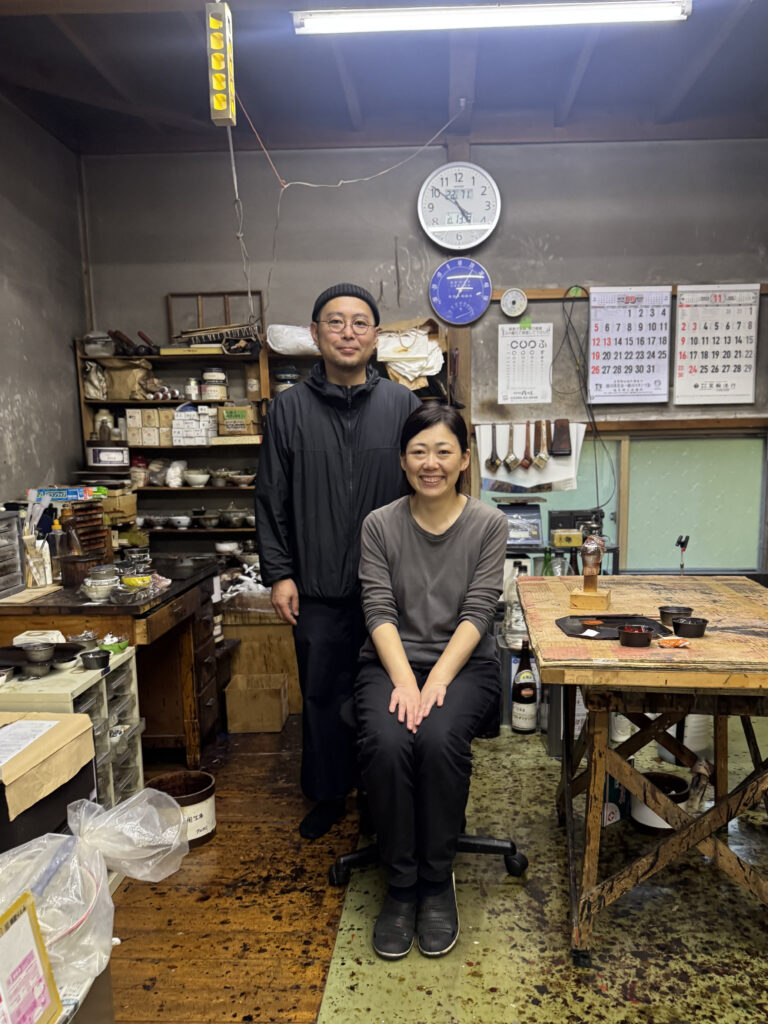
On this visit, I was welcomed into Maruyoshi Kosaka Lacquerware Workshop by Reo Kosaka and Chie Kosaka.
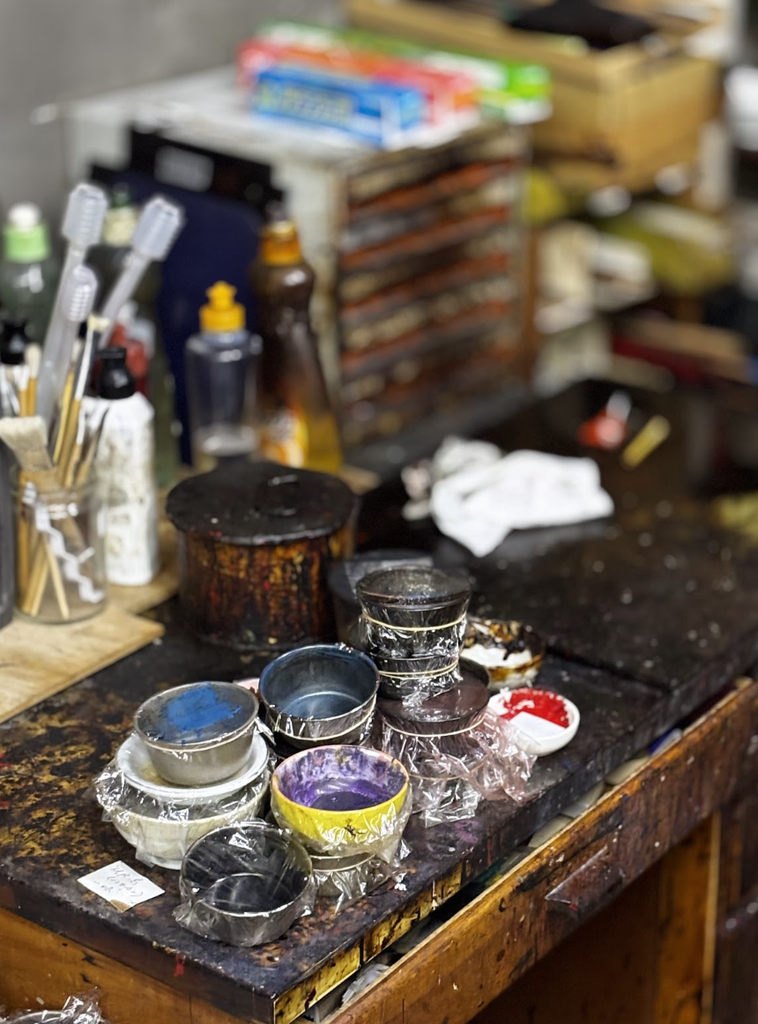
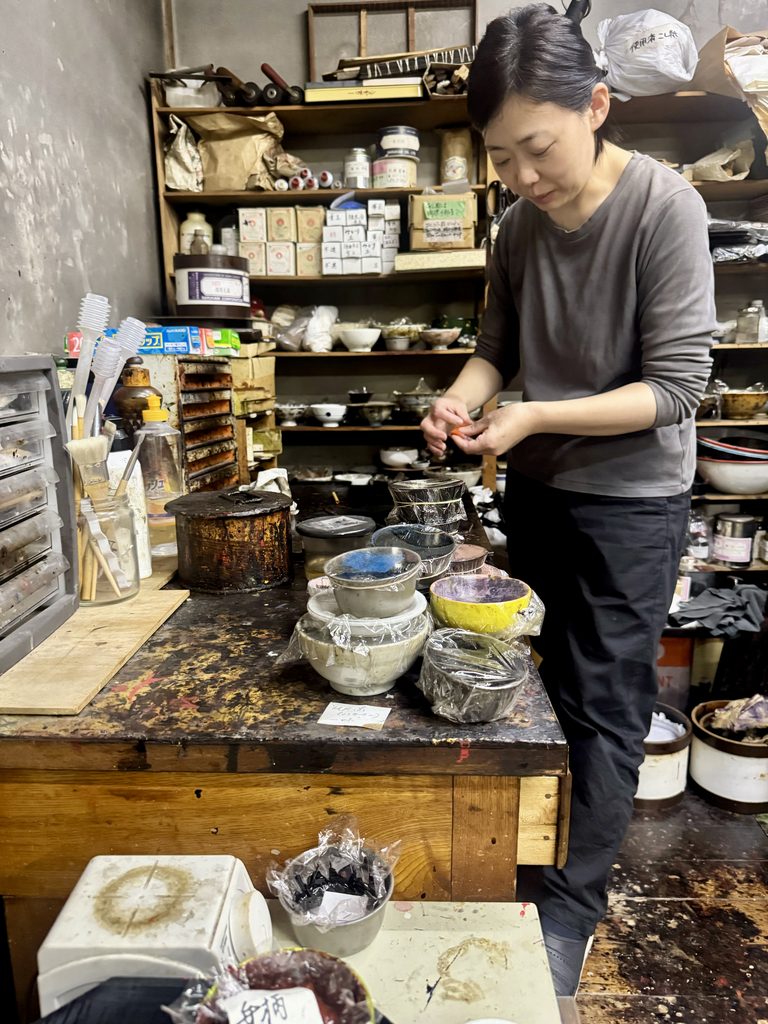
Stepping inside the workshop, I found shelves filled with vessels, tools and containers of lacquer. Every corner seemed to carry traces of the many hands and countless hours that had passed through this space.
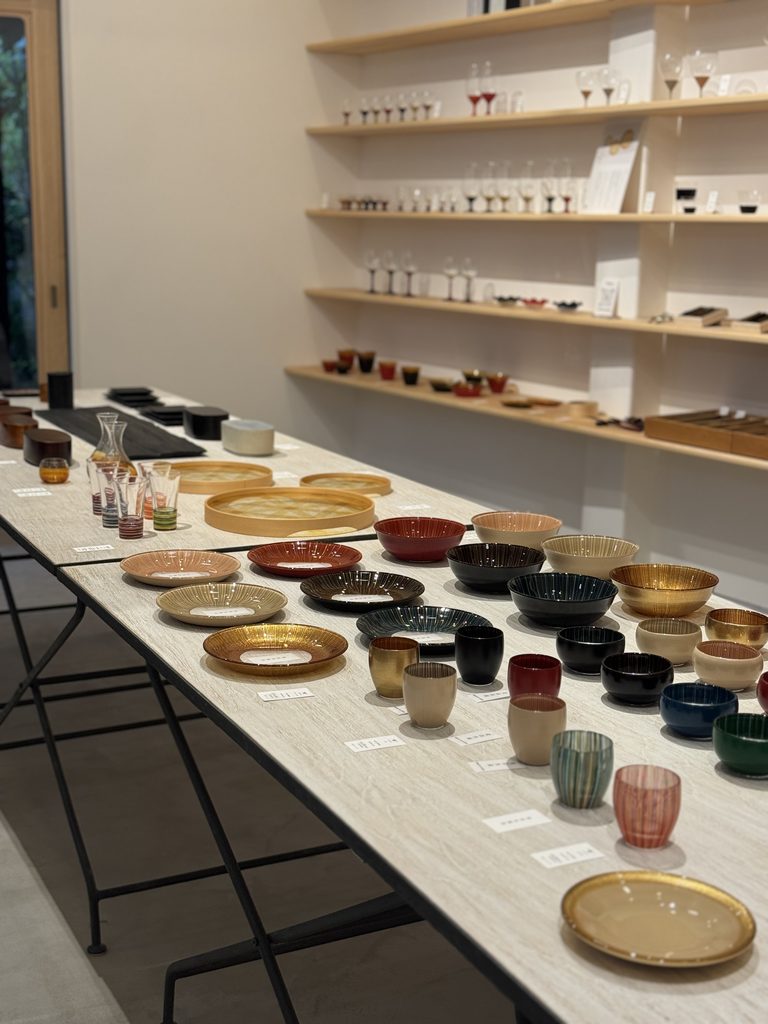
But what caught my attention most was the light.Across the polished surfaces of the lacquerware, it appeared soft and deep, changing subtly depending on where I stood.
Looking at the finished pieces, I began to sense something beyond their beauty: the extraordinary amount of time hidden beneath each surface.
Layer Upon Layer: The Time Behind Lacquerware
Creating lacquerware requires patience.
Lacquer is applied, dried and polished.
Then the process begins again.
Layer after layer is carefully built up, and it can take weeks—or sometimes months—before a single piece is complete.
Watching Reo and Chie work together, I was struck by the quiet harmony between them.Their movements reflected knowledge accumulated over generations, yet there was nothing static about the way they approached their craft.
They were preserving traditional techniques, but they were also looking ahead.Standing in their workshop made me think again about what it really means for a tradition to survive.
Perhaps tradition is not simply about repeating what has always been done.Perhaps it is about understanding what must remain, while still being willing to evolve.
Discovering New Possibilities Through Lacquer and Glass
One of the most fascinating aspects of Maruyoshi Kosaka Lacquerware Workshop is its willingness to explore materials beyond traditional wooden vessels.
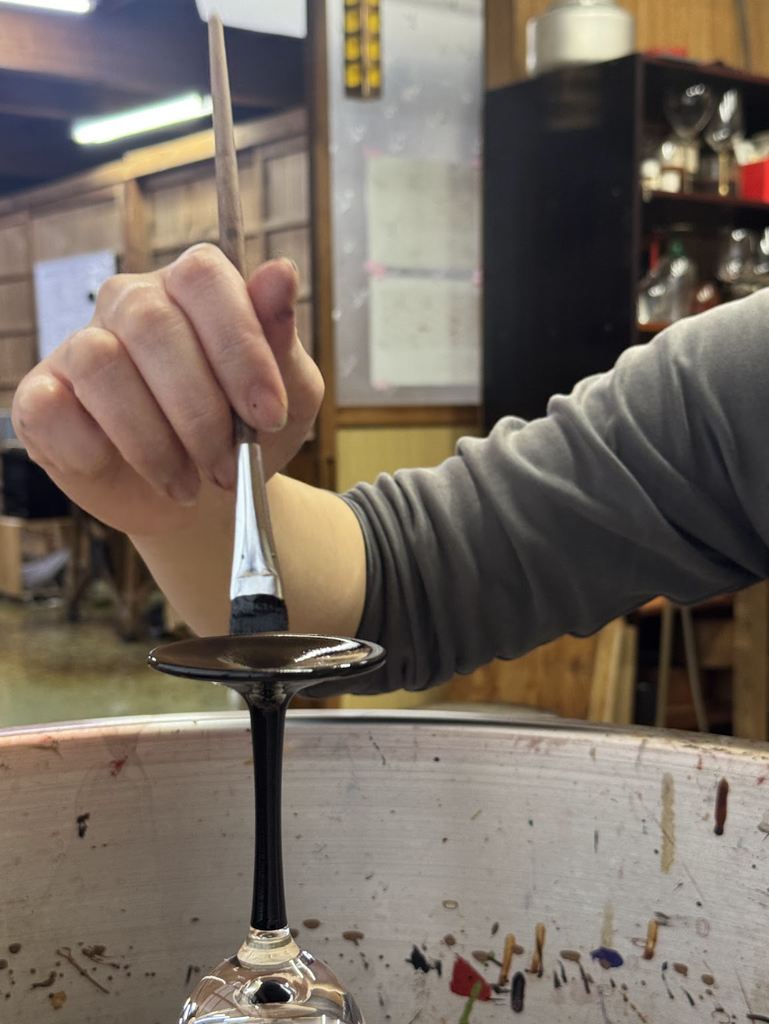
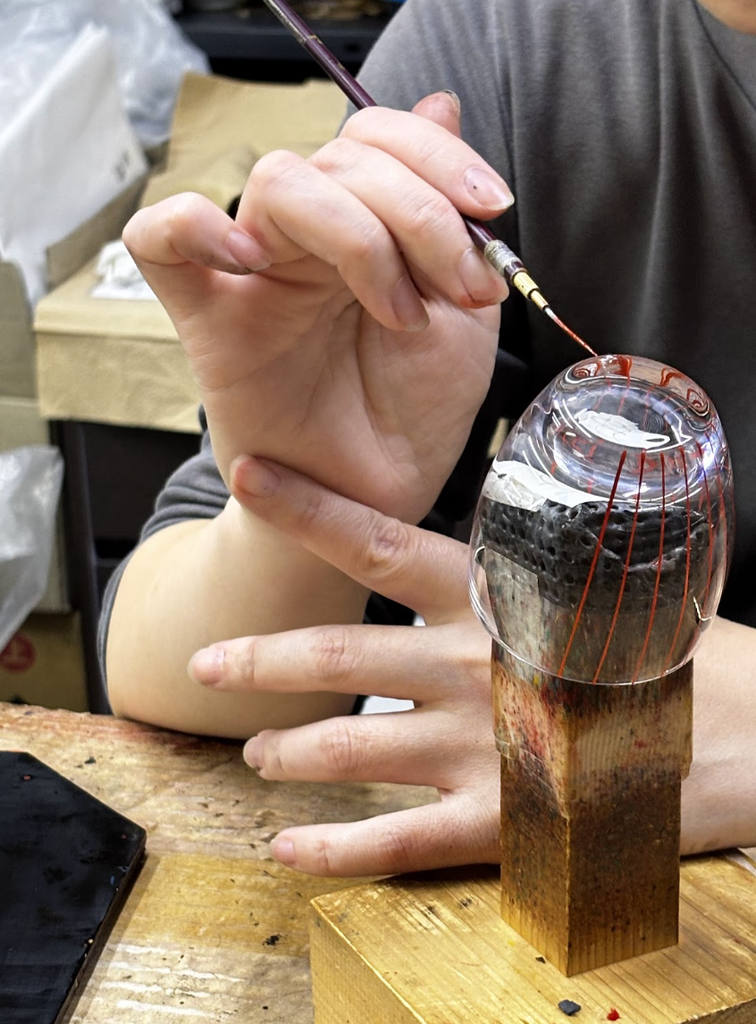
I was particularly drawn to their lacquered glassware.Glass and lacquer seem, at first, to belong to very different worlds.
One is transparent and allows light to pass through it. The other is known for its depth, lustre and rich surface.Yet when the two come together, something unexpected happens.
Watching lacquer being applied to glass, I saw a centuries-old technique take on an entirely new expression. The transparency of the glass interacts with the depth of the lacquer, creating changing reflections of light that would not be possible with wood alone.
What interested me most was that this experimentation did not seem to weaken the tradition.Instead, it revealed another side of it.
The old and the new were not competing with one another. Innovation became a way of allowing the qualities of the traditional technique to emerge more clearly.
It made me realise that embracing change does not necessarily mean moving away from tradition.Sometimes, change is precisely what allows a tradition to continue.
A Craft Shaped by the Forests of Kiso
Throughout my visit, I kept returning to the connection between lacquerware and the landscape surrounding Kiso.
For centuries, the forests here have provided the material foundation for woodworking traditions.
Wood becomes a vessel.Lacquer protects it, strengthens it and brings depth and beauty to its surface.And as lacquerware is used over time, its appearance gradually changes.
The object continues to live. looking around the workshop, I began to see each piece not simply as an individual object, but as part of a much longer story connecting landscape, material, artisan and everyday life.
Perhaps this is why objects created here seem so closely tied to the place itself. The forest provides the material. Human hands give it form. And time completes the story.
Where Wood, Lacquer and Light Meet
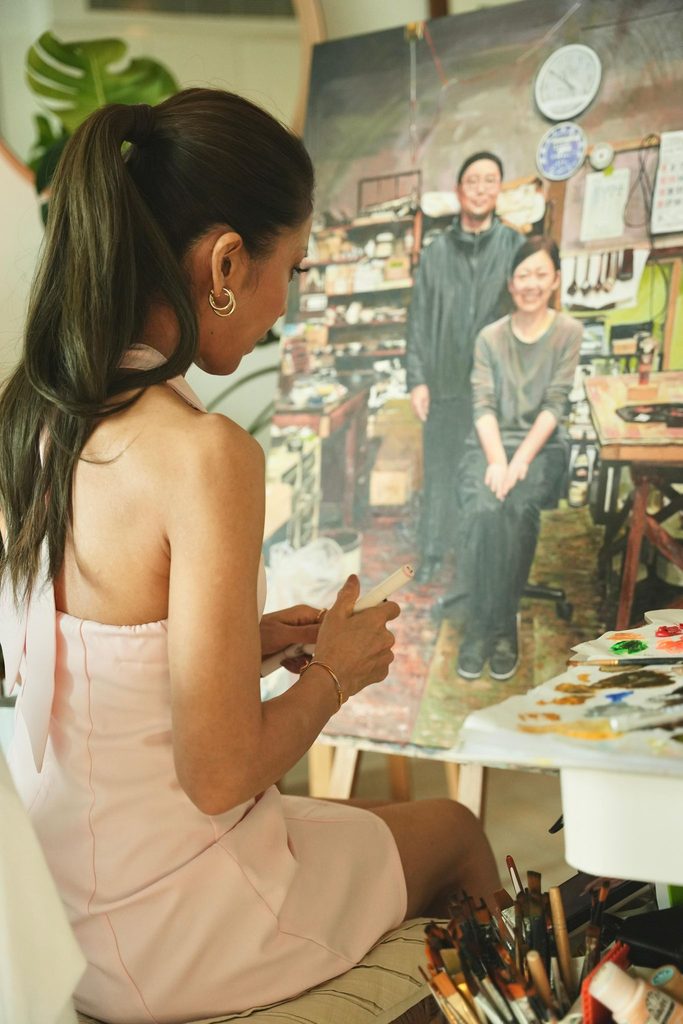
My encounter with Maruyoshi Kosaka Lacquerware Workshop eventually became the inspiration for my new painting, Kiso Lacquerware “Layering Lacquer”.
What stayed with me was not only the beauty of the lacquerware itself. It was the light reflected across its polished surfaces.The quiet concentration of the artisans at work. The layers of time hidden beneath what appeared, at first glance, to be a simple object. And perhaps most of all, the way tradition and experimentation existed naturally side by side.
Lacquer is more than a finish. It protects wood, changes with time and carries traces of the years through which an object has lived.
My time in Kiso-Hirasawa reminded me that tradition is not something preserved separately from everyday life.
It lives through the people who continue to practise it. Through their hands, it changes. And because it changes, it continues.
An Exhibition Celebrating 60 Years of Singapore–Japan Diplomatic Relations
The work inspired by this journey to Kiso-Hirasawa will also form part of my upcoming exhibition at the Japan Creative Centre in Singapore, held under the Embassy of Japan in Singapore from 29 September to 10 October 2026 as part of the celebrations marking the 60th anniversary of diplomatic relations between Singapore and Japan.
For the first time, works from my Singapore Culture Series, previously introduced through Voyage, will be presented alongside the new Japan Culture Series.
Through these works, encounters from two countries will come together: different landscapes, different traditions and different people, each connected by the hands that continue to carry culture forward.
As this journey continues, I look forward to sharing more of the people, places and traditions behind the works that will form this exhibition.
Until then, on the next full moon, I’ll return with another story from Japan. I hope you’ll join me.