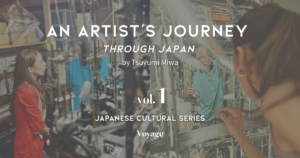
Japan is home to many forms of exquisite craftsmanship that remain largely unknown beyond the places where they were born.
Passed down together with the memories of each region, these traditions continue to live on quietly through the hands of skilled artisans. This new series sets out to discover the beauty of Japan’s enduring crafts.
Our guide is artist Tsuyumi Miwa, who has previously contributed to Voyage through the series Story of Art, introducing the people who sustain Singapore’s cultural heritage and the traditional crafts passed down through generations, alongside her own artworks.
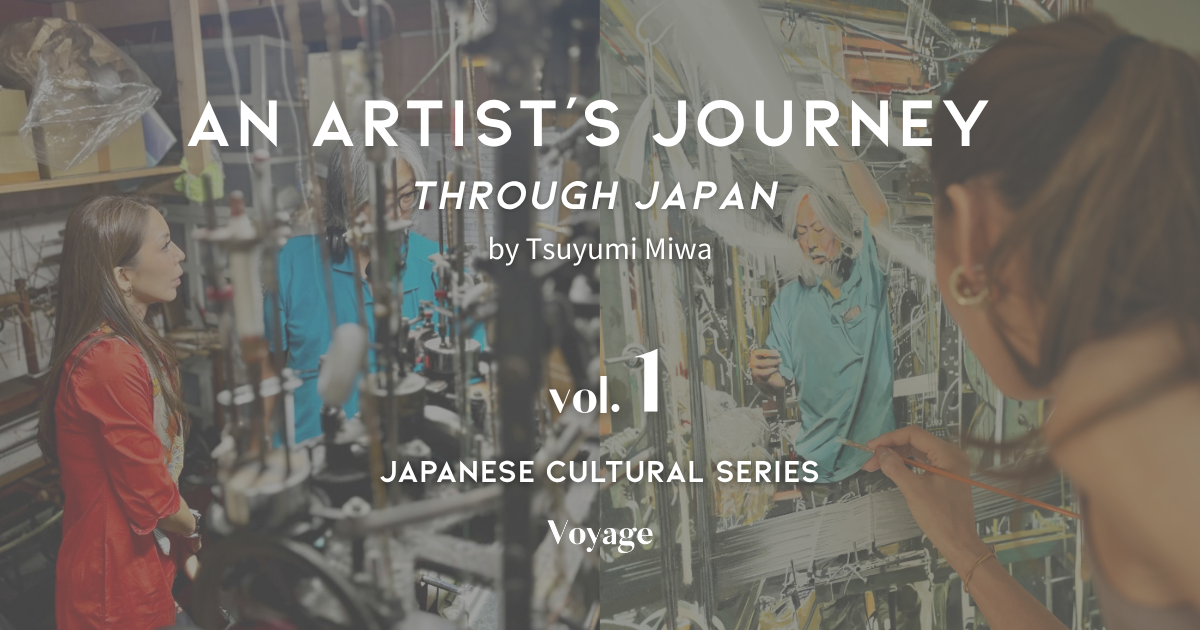
This new chapter is entitled An Artist’s Journey Through Japan.
Travelling across Japan, Miwa meets contemporary artisans and explores the objects created by their hands, the memories embedded in the places where they work, and the cultural traditions they continue to carry forward—all through the distinctive perspective of an artist.
Before the completed artworks are unveiled, this series will gradually share the stories behind their creation: the process through which each work takes shape, Miwa’s visits with the artisans, the scenes that remained with her, and the stories she encountered along the way.
Part 1: Kyoto and Nishijin-ori:Listening to the Voice of the Loom — Hideto Sasaki, Sixth-Generation Artisan at Rindoya
My first destination is Nishijin, Kyoto.
In Kyoto’s historic Nishijin district, the sound of weaving drifts out from workshops tucked away along the narrow streets.
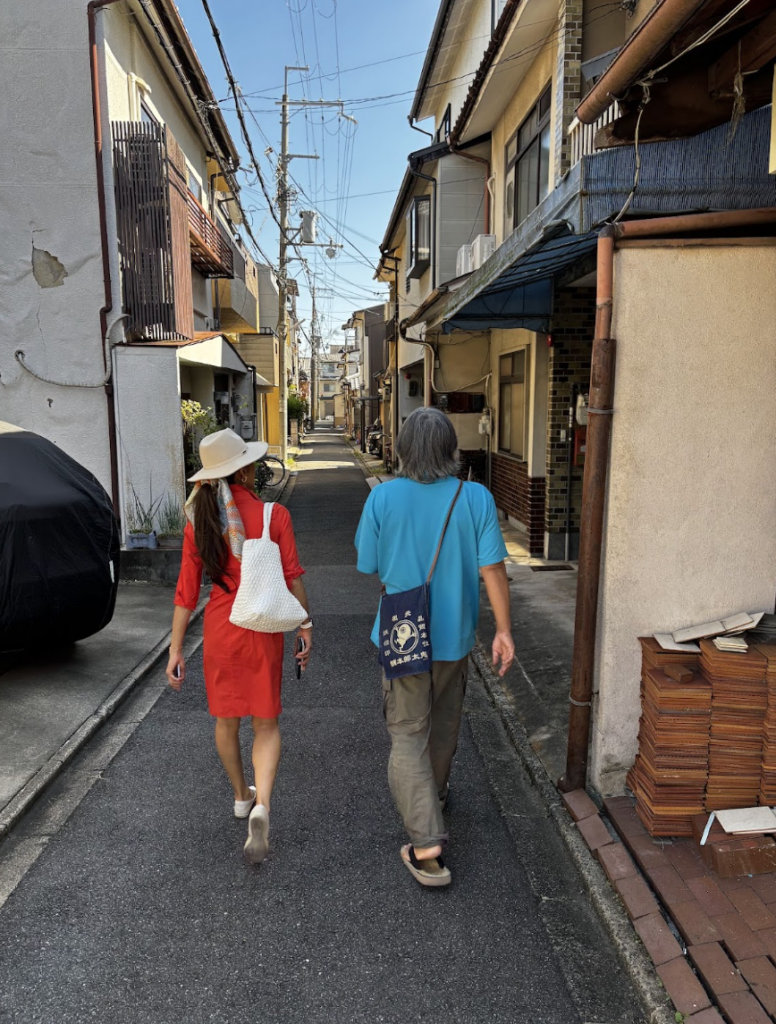
Known as the birthplace of Nishijin-ori textiles, the district remains one of Japan’s most celebrated centres of silk weaving. Walking through the neighbourhood, I sense more than the beauty of the finished fabrics. I can also feel the many hours behind each piece and the presence of the hands that brought it into being.
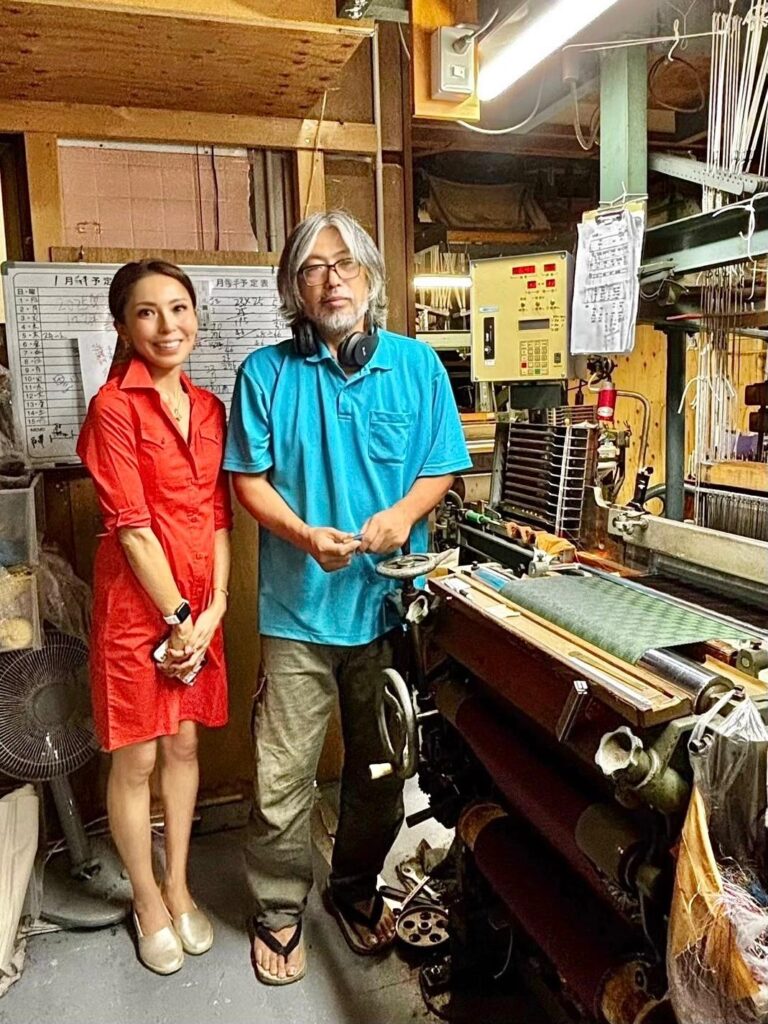
On this visit, I was welcomed into Rindouya, a Nishijin-ori workshop led by sixth-generation artisan Hideto Sasaki, who was born and raised in Nishijin.
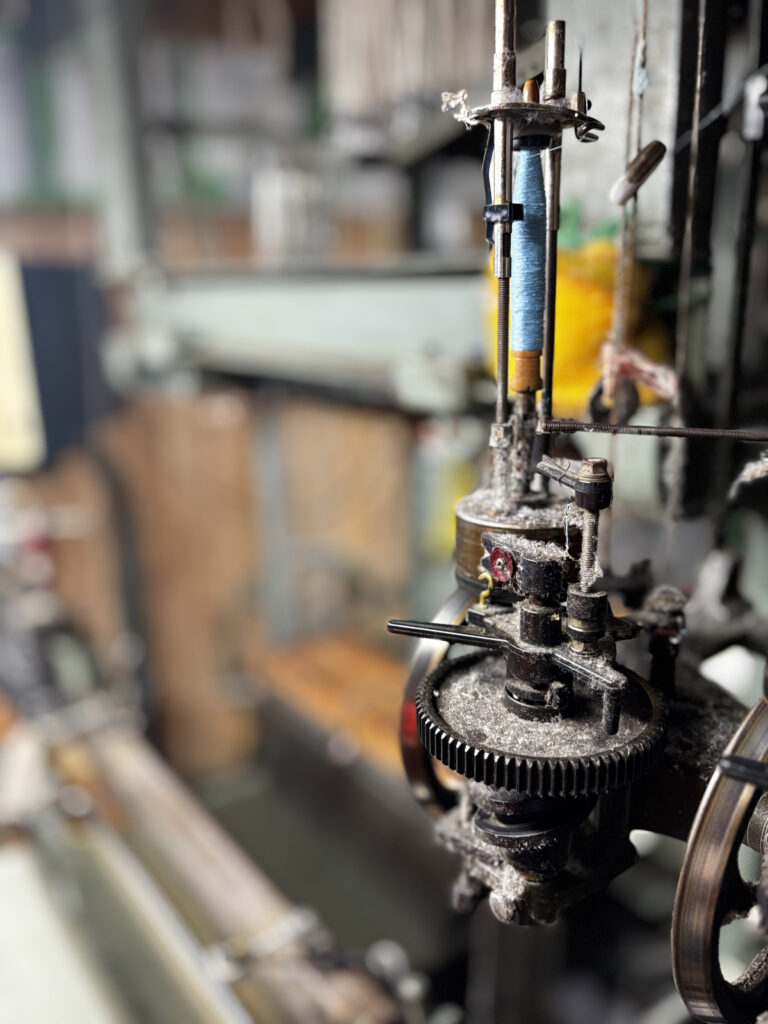
Mr Sasaki has lived among looms and their sounds since childhood. Five large looms stand inside his workshop, each operating with remarkable precision from morning until evening.
Clack, clack.
Their steady rhythm fills the space. For Mr Sasaki, it is both the sound of his work and the familiar sound of everyday life—a sound that has remained with him since childhood.
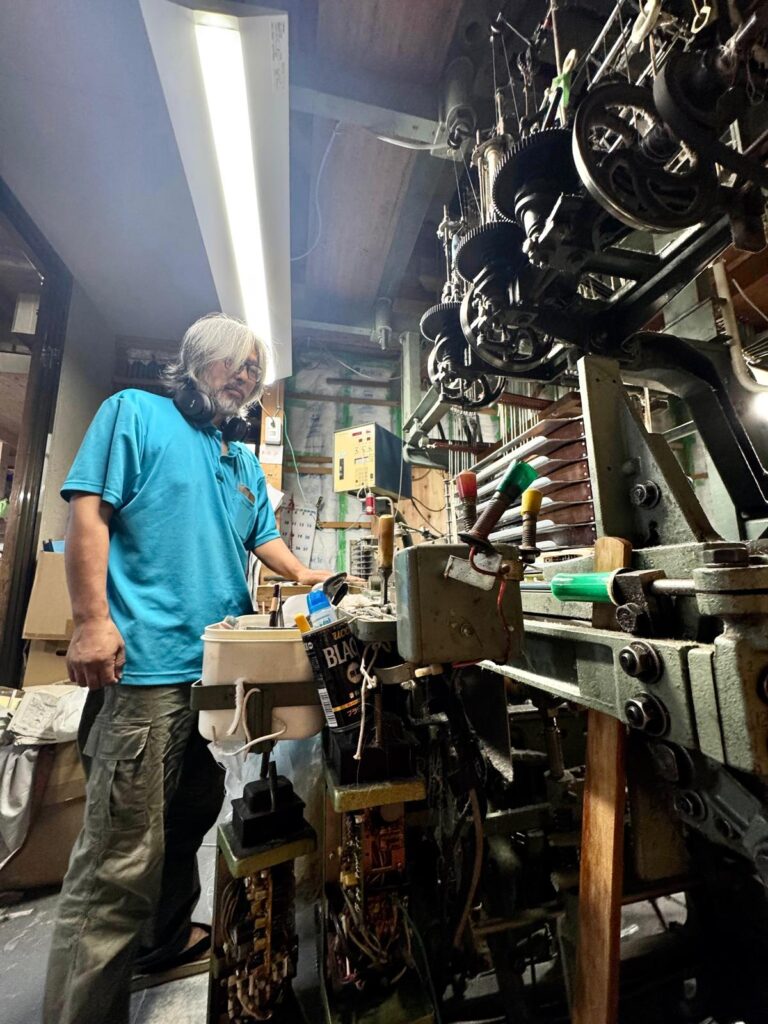
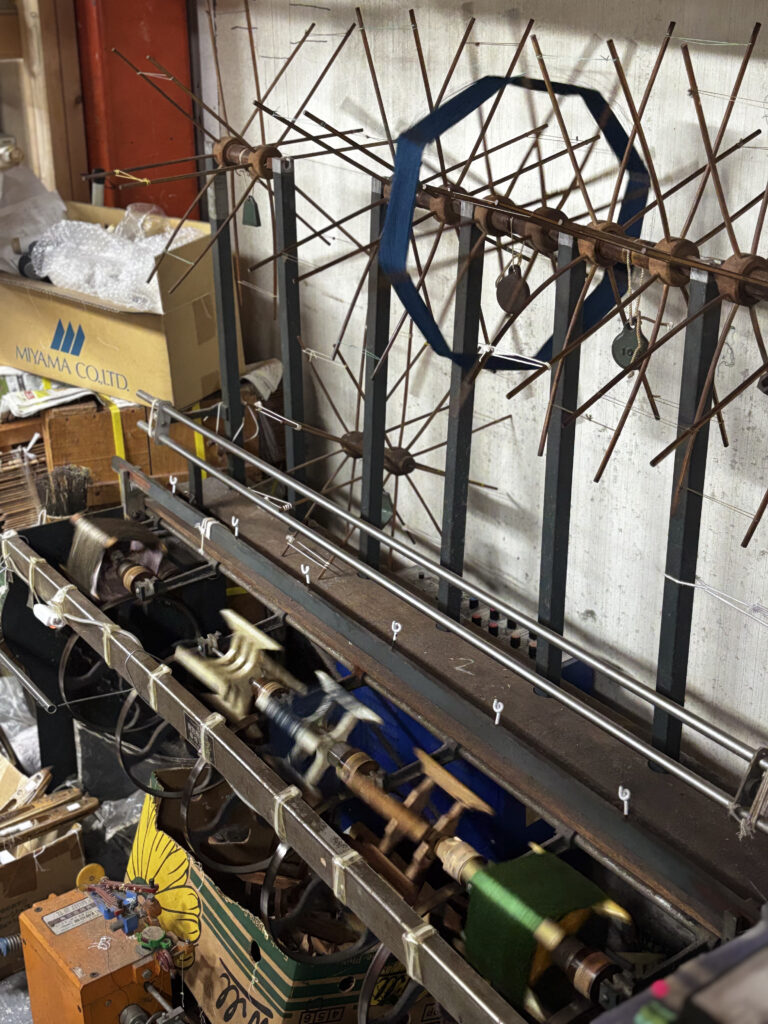
The Sound of the Looms in Kyoto’s Nishijin District Listening to the Voice of the Loom
Creating Nishijin-ori requires an extraordinary degree of care and concentration.
Thousands of coordinated movements come together as intricate patterns gradually emerge. Throughout the process, every thread must maintain precisely the right tension. Although machinery assists with the weaving, the quality of the finished textile ultimately depends on the artisan’s judgement, experience, and constant attention.
What stayed with me most was the way Mr Sasaki listened.
He explained that even the slightest change in the sound of a loom can reveal a shift in thread tension or signal that something needs to be adjusted. After decades of experience, he has learned to sense these subtle messages almost instinctively.
To my ears, the looms seemed to repeat the same steady rhythm. To Mr Sasaki, however, each one had its own voice, communicating its condition through sound.
Watching him at work reminded me that craftsmanship is not simply a matter of technical skill or dexterity.
He follows the movement of the threads with his eyes, feels the smallest changes through his fingertips, and listens to the voice of the loom. Every sense, refined over many years, is quietly woven into the fabric.
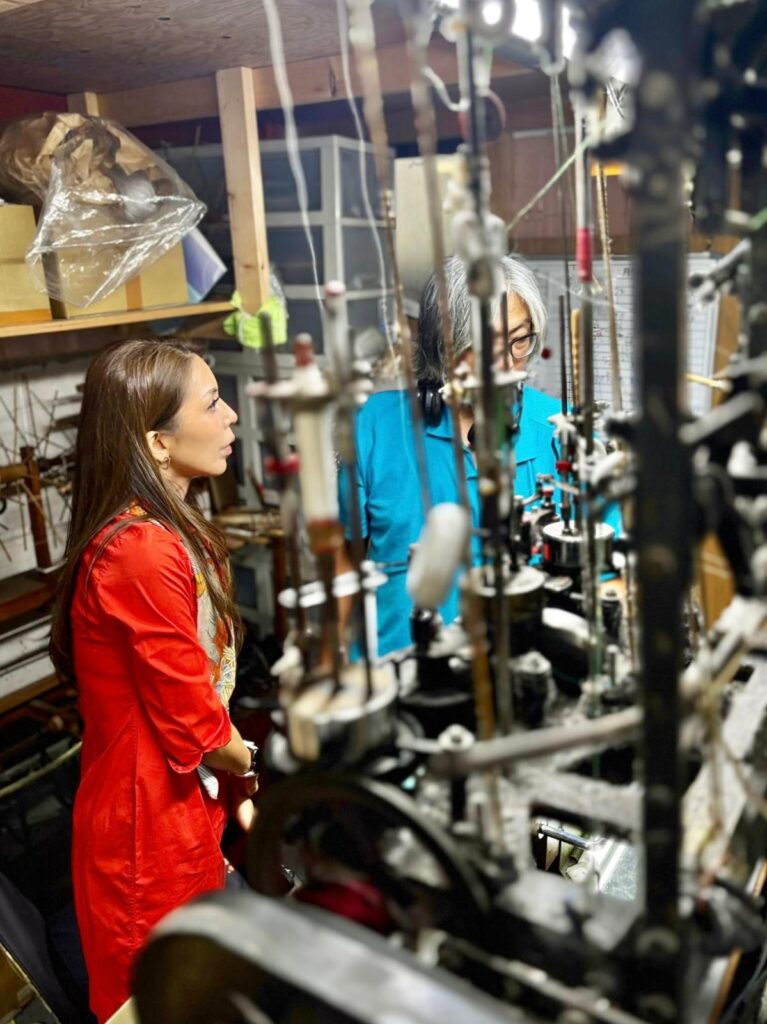
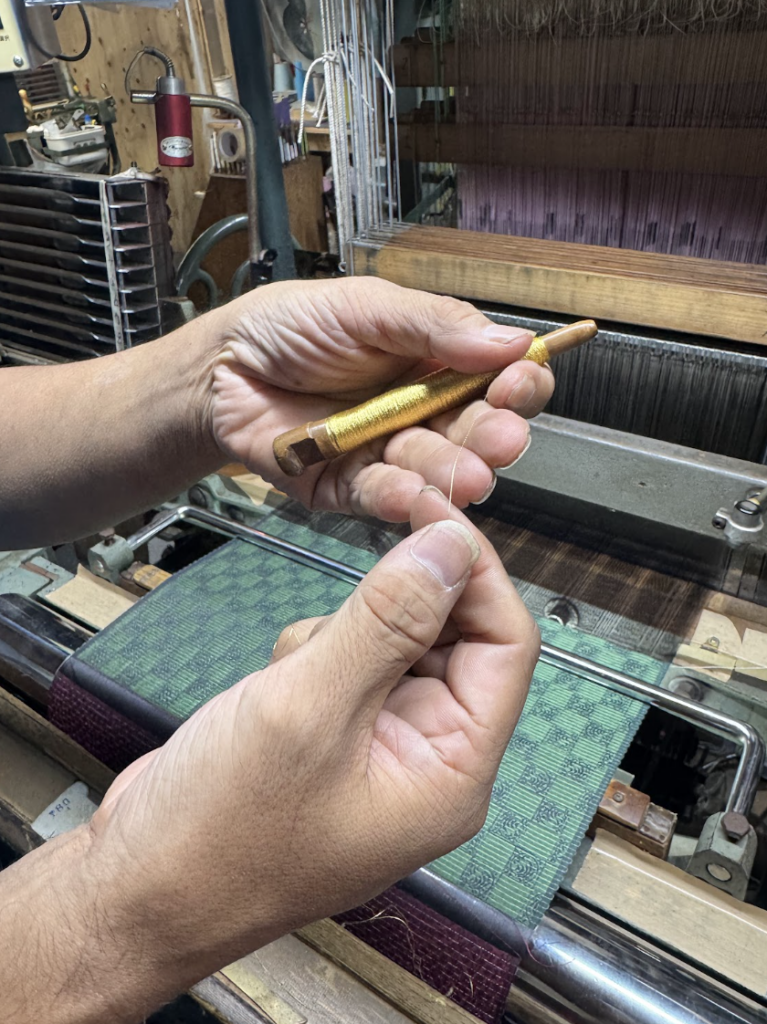
Tradition Lives in the Rhythm of Everyday Life
Traditional kimono production now faces many challenges, including a decline in the number of skilled artisans and changes in the way people live and dress.
Yet in workshops such as Rindouya, the looms continue to run. Through the hands of its artisans, the skills and spirit of Nishijin-ori are being carried into the future.
As I stood beside Mr Sasaki and watched the looms at work, I realised that tradition does not live only in beautiful finished objects.
It lives in returning to the loom each morning.
In checking the condition of every thread.
In noticing the smallest sound that is different from the day before.
Perhaps tradition survives most profoundly within these quiet, repeated acts of everyday practice.
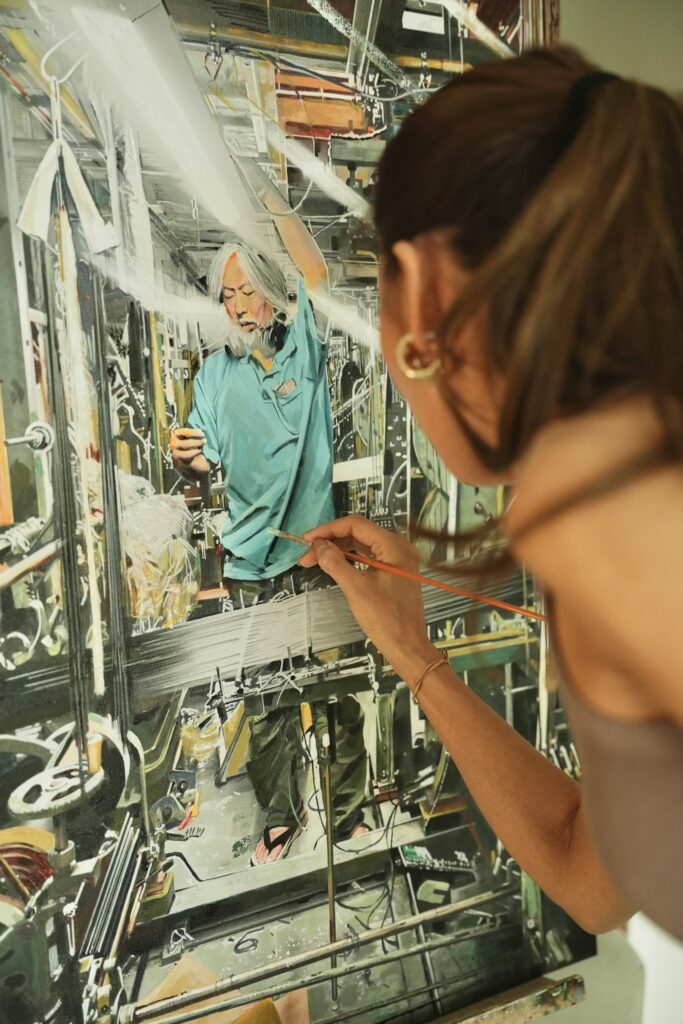
What kind of painting will emerge from this encounter? I look forward to sharing glimpses of the creative process with you in the chapters ahead.
An Exhibition Celebrating 60 Years of Singapore–Japan Diplomatic Relations
At last, I’m delighted to share some wonderful news.
As part of the official celebrations marking the 60th anniversary of diplomatic relations between Japan and Singapore, I have been honoured to present an exhibition at the Japan Creative Centre, under the Embassy of Japan in Singapore, from 29 September to 10 October 2026.
I’m also pleased that Voyage is the first publication to officially announce the exhibition.
For the first time, works from the Singapore Culture Series, previously featured in Voyage, will be exhibited alongside the newly launched Japan Culture Series, bringing both collections together under one roof.
An opening reception will be held on 29 September, followed by an Artist Talk on 3 October. Throughout the exhibition, visitors will have the opportunity not only to experience the artworks, but also to discover the traditions, craftsmanship and stories that have been carefully passed down through generations.
Which artisans will be taking part? What stories lie behind each work? Over the coming weeks, I look forward to sharing the people, places and traditions that have shaped this exhibition through this new series.
Until then, on the next full moon, I’ll return with another story from Japan.
I hope you’ll join me.