Across Japan, traditional crafts have been shaped not only by human hands, but also by the landscapes in which they were born.
In this third chapter of An Artist’s Journey Through Japan, artist Tsuyumi Miwa travels to Mino City in Gifu Prefecture. Blessed with clear, abundant water, this region has sustained a tradition of washi papermaking for more than 1,300 years.
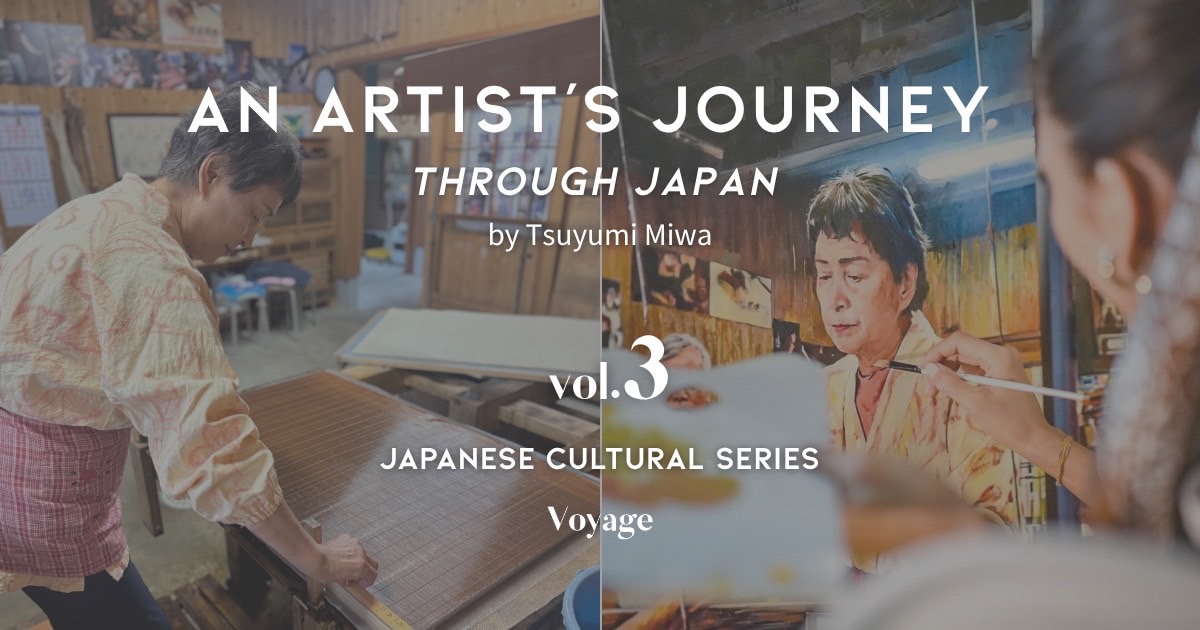
This time, Miwa visits Mino Takekami Workshop, where Takehisa Suzuki and Toyomi Suzuki, members of the Association for the Preservation of Hon-minoshi Papermaking, continue to make paper by hand. Here, natural fibres are suspended in water, gathered onto a bamboo screen and gradually formed into a single sheet.
Water, light, plant fibres and the patient movement of human hands. In the stillness of the workshop, Miwa discovers the quiet beauty held within Mino Washi.
Part 3: Mino Washi, Gifu — Paper Shaped by Water
My third destination is Mino City in Gifu Prefecture.
Paper has been made in this region for more than 1,300 years. Among the ancient documents preserved in the Shosoin Repository in Nara are census papers produced in Mino Province in 702. Even after so many centuries, the sound of flowing water remains part of the landscape, and papermaking continues to be woven into daily life.
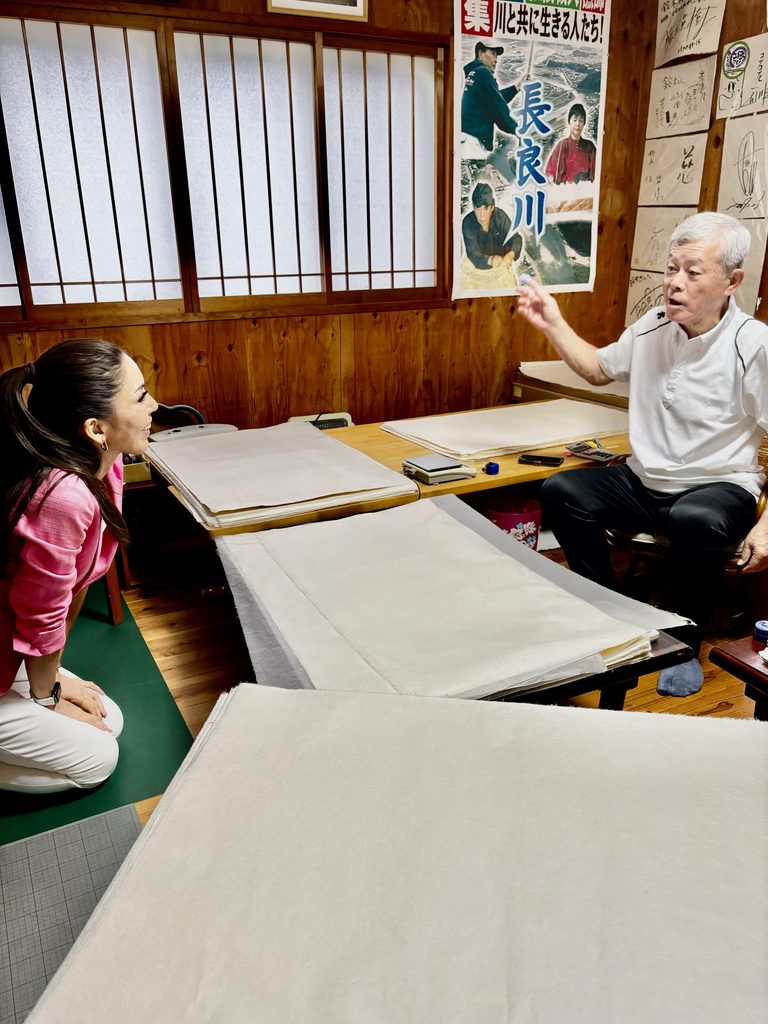
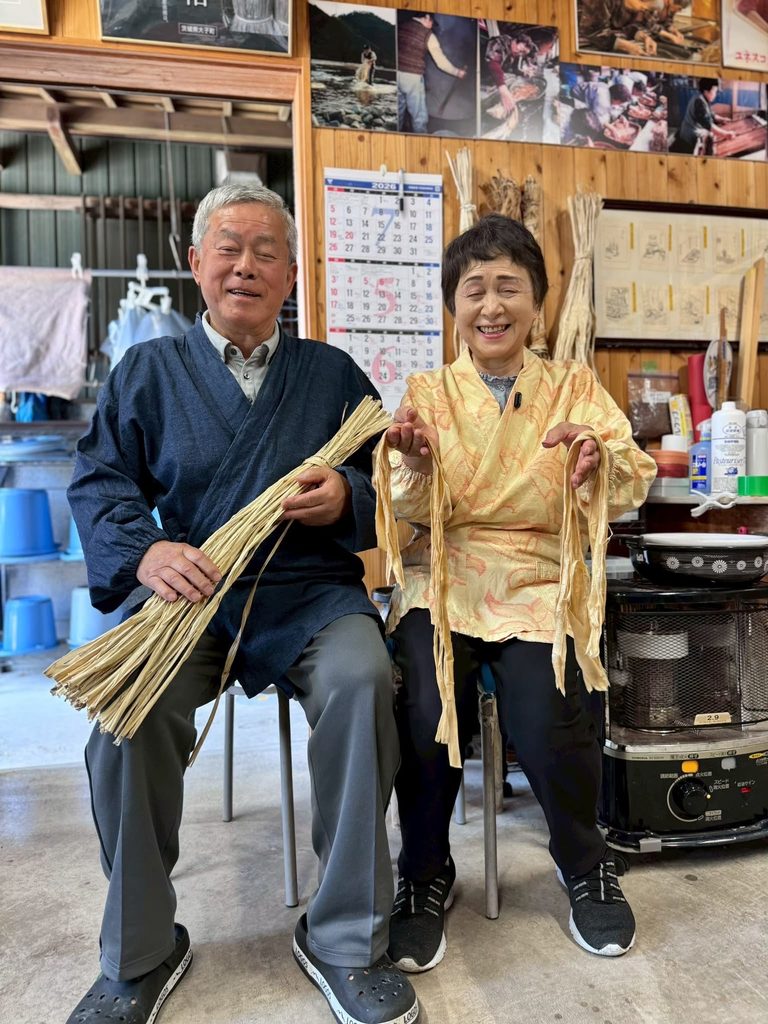
At Mino Takekami Workshop, I was welcomed by Takehisa Suzuki and Toyomi Suzuki. Takehisa once stepped away from the family tradition before eventually returning to the workshop. Today, Takehisa and Toyomi work together to carry its knowledge forward.
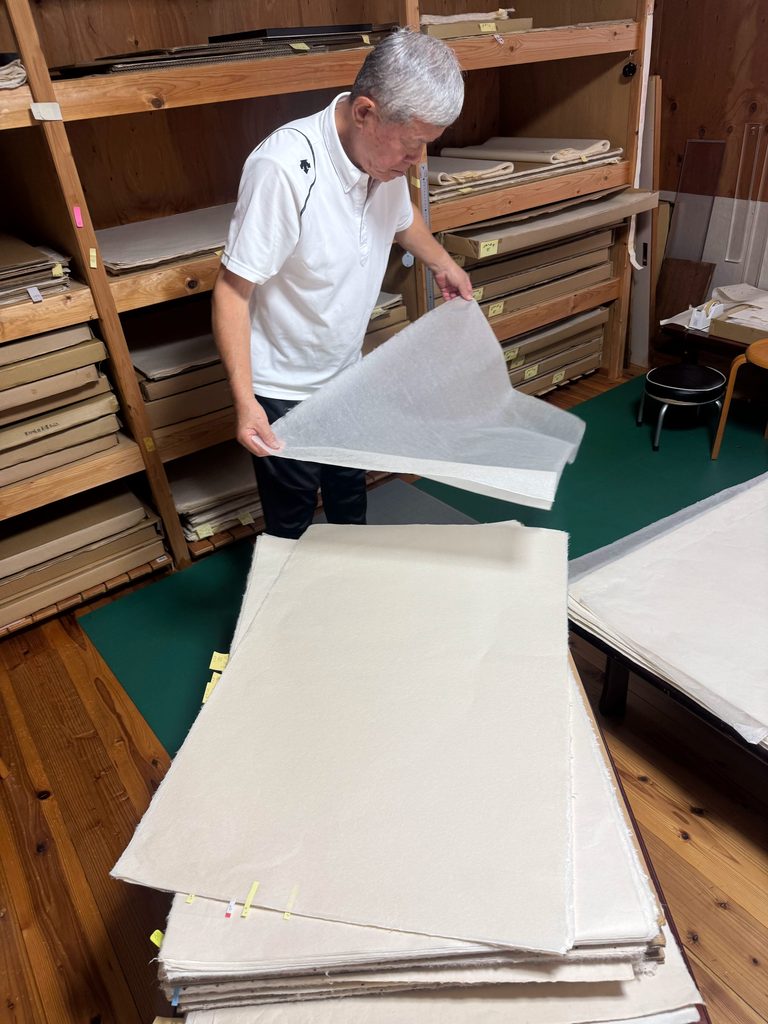
Inside, time seemed to move without urgency. Fibres drifted across the surface of the water. A wooden frame moved gently through the pulp. Soft sunlight filtered through sheets left to dry.
Every detail reflected the calm precision of a craft refined over generations.
From Natural Fibres to a Single Sheet
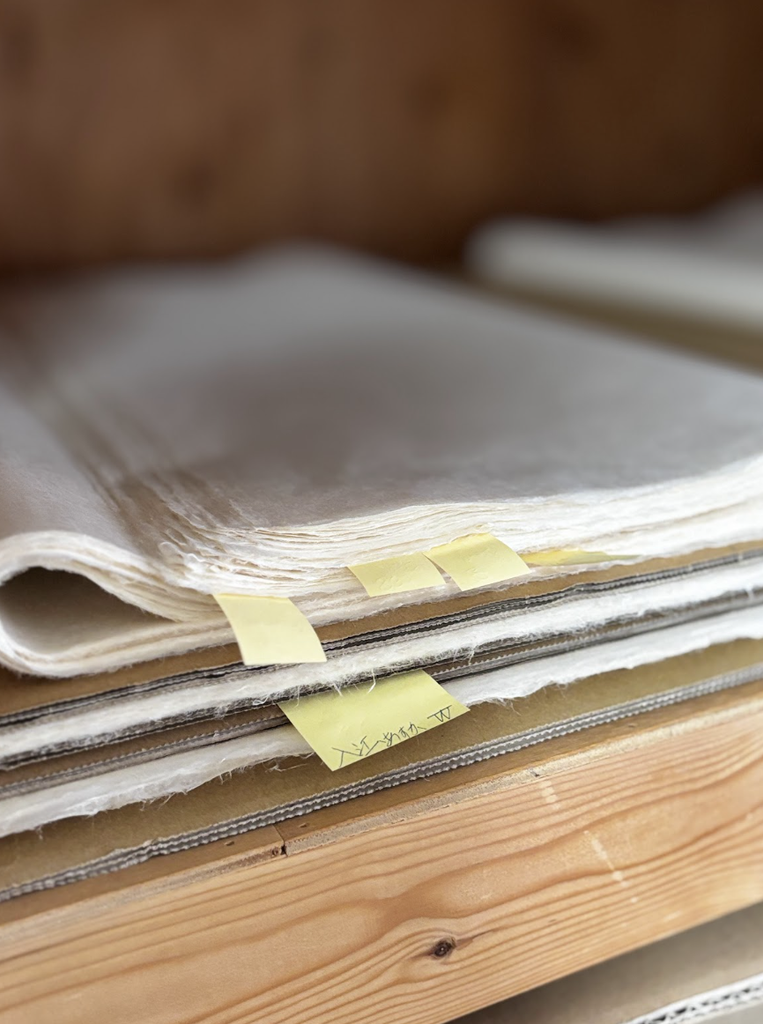
Washi can be made from several plant fibres, including kozo, mitsumata and gampi. For Hon-minoshi, only kozo, or paper mulberry, is used, its long fibres giving the paper its distinctive strength and softness.
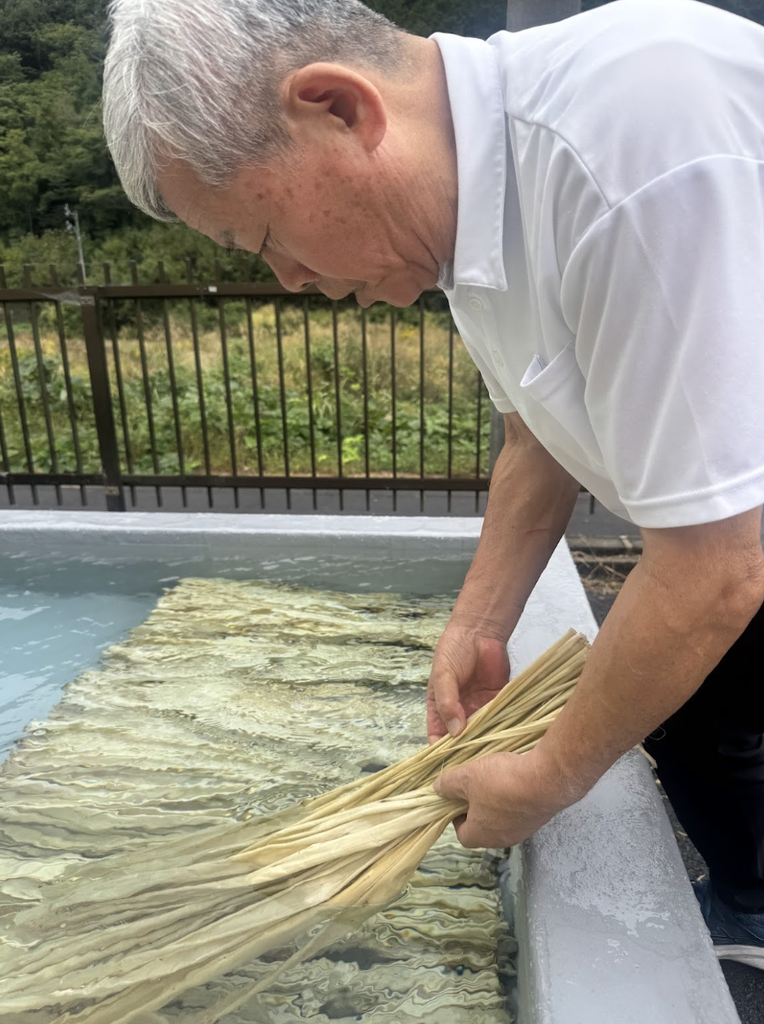
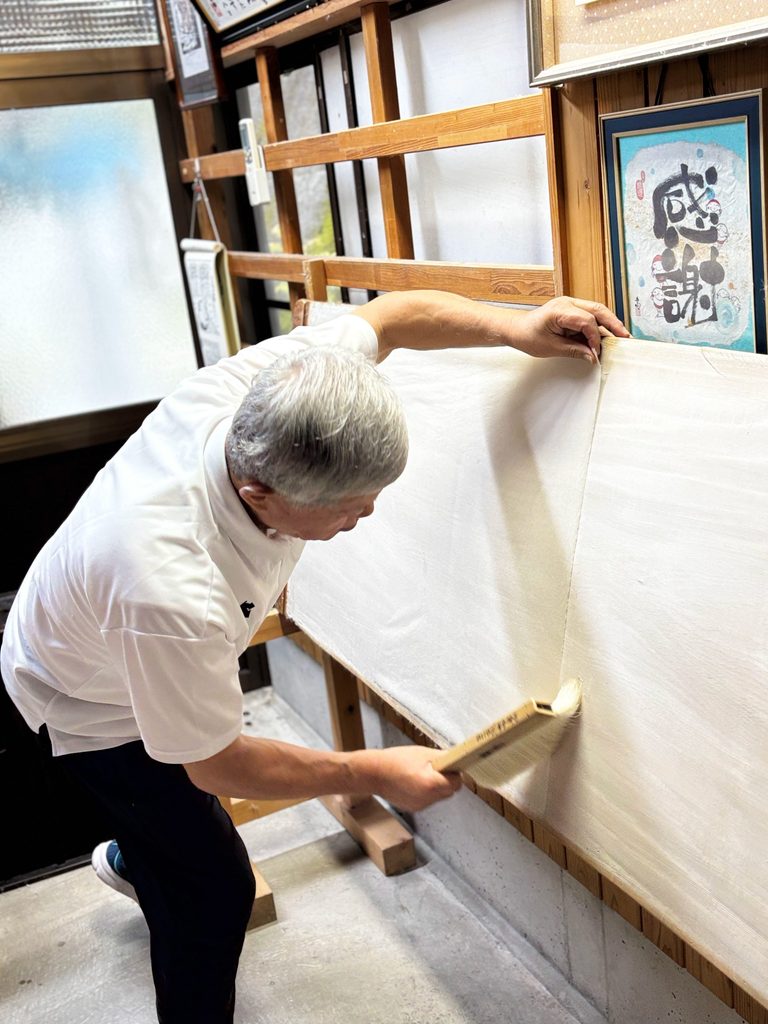
The inner white bark is soaked in clear water, boiled and carefully cleaned. Any remaining specks or damaged sections are removed by hand before the fibres are beaten and separated.
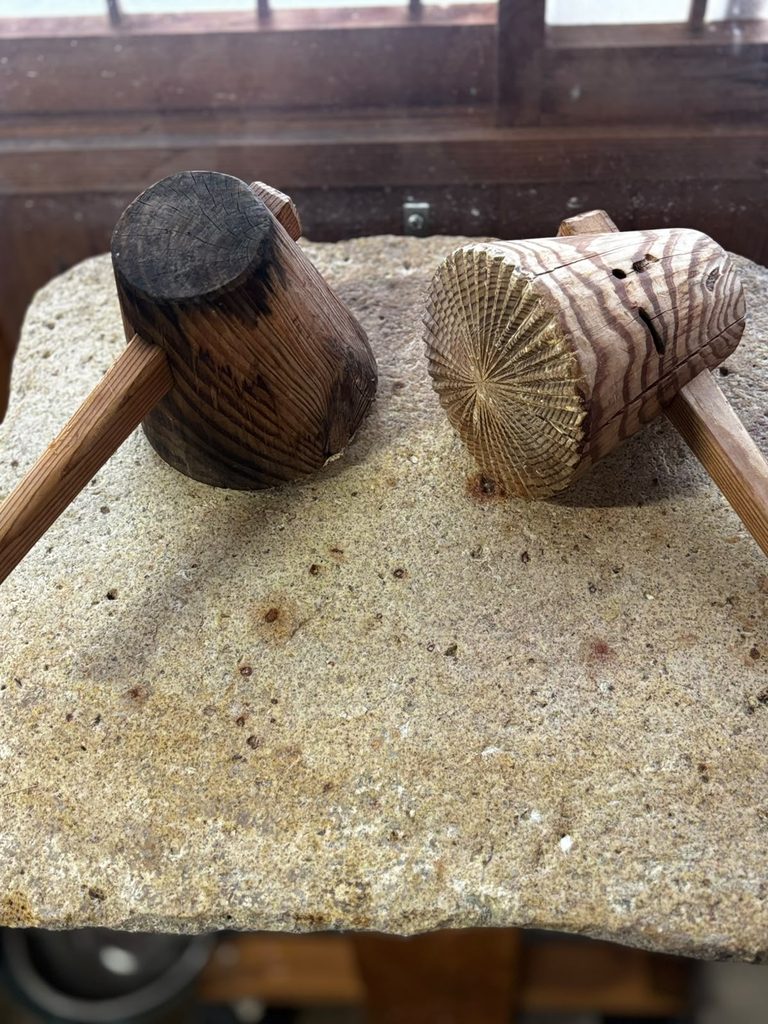
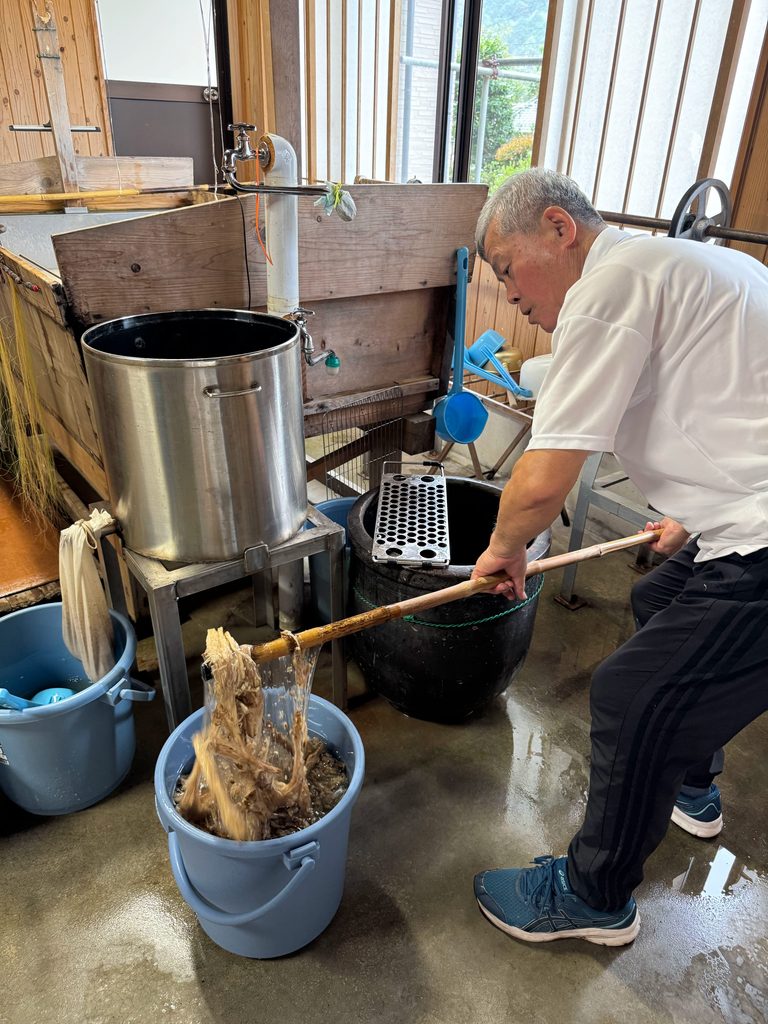
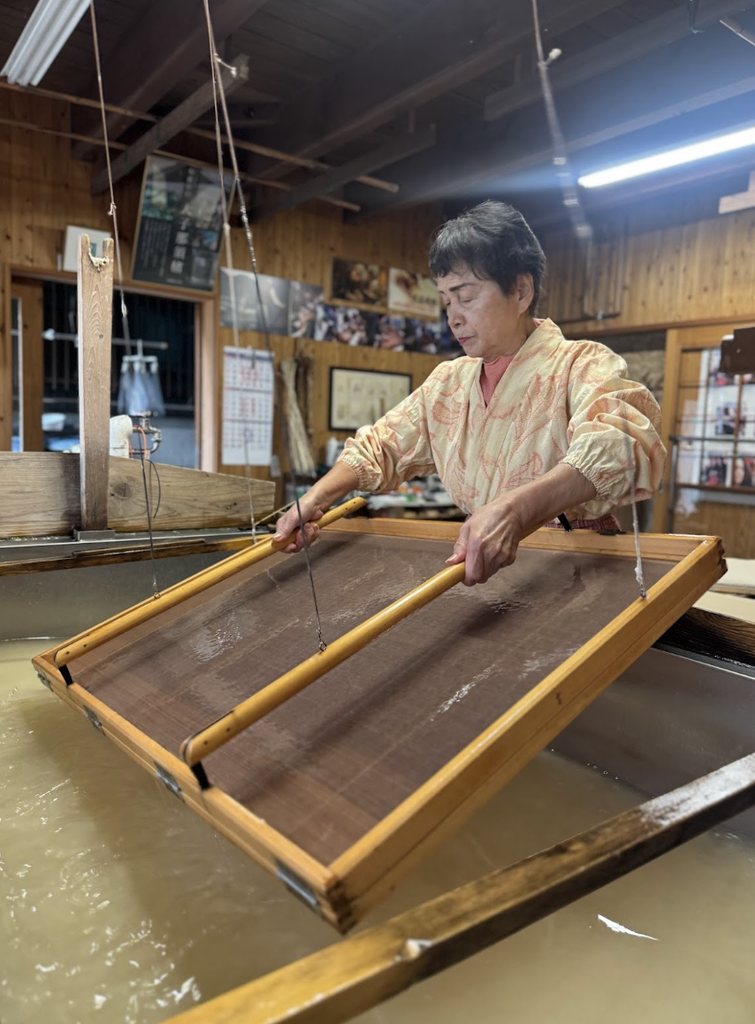
The prepared fibres are then mixed in a vat with water and a natural dispersing agent extracted from tororoaoi. A bamboo screen is fitted into a wooden frame known as a suketa, which is moved through the mixture to gather the fibres.
For Hon-minoshi, the frame is rocked not only backwards and forwards, but also from side to side. This distinctive motion allows the long kozo fibres to interlace evenly in different directions, giving the finished paper its strength and beautifully balanced texture.
The movements may appear simple, yet every detail matters: the rhythm and angle of the frame, the condition of the fibres and even the quality of the water. Strength and lightness. Smoothness and softness. Each quality depends on decisions made through the artisan’s hands.
Water gives the paper its form. Human hands reveal its character.
Knowledge Held in Quiet Movement
Watching Takehisa and Toyomi work, I was struck by the balance between precision and gentleness.
The frame enters the water, rises and begins to sway. Their movements look almost effortless, but each gesture reflects years of experience. The work unfolds with a quiet rhythm, as though they are responding not only to one another, but also to the water and fibres before them.
Papermaking is not simply the act of transforming plant material into a thin sheet. It requires the artisan to observe the condition of the natural materials and adjust each movement accordingly.
What I saw in the Suzukis’ workshop was knowledge passed from one generation to the next—and the quiet strength of two people continuing that practice today.
Tradition lives not only in the finished paper, but in every movement required to make it.
The Strength and Beauty of Paper Shaped by Clear Water
Water lies at the heart of Mino Washi.
The clear waters of the Itadori River, a tributary of the Nagara River, have long supported each stage of papermaking—from soaking and washing the raw material to preparing the fibres that will become paper.
Impurities are removed in clear water. The fibres are gathered into sheets, pressed and carefully dried. Nature and craftsmanship remain connected throughout the entire process.
When Hon-minoshi is held up to the light, its fibres can be seen crossing one another in an exceptionally even formation. The paper is thin and soft, yet remarkably strong and durable. For centuries, washi has supported Japanese life and culture through books, screens, lanterns, calligraphy and works of art.
In 2014, the traditional papermaking techniques of Hon-minoshi, together with those of Sekishu-Banshi and Hosokawa-shi, were inscribed on UNESCO’s Representative List of the Intangible Cultural Heritage of Humanity under the title Washi, craftsmanship of traditional Japanese hand-made paper.
The water of the land. Plant fibres. Tools refined over generations. The hands of the artisan.
Each sheet exists because all of these elements come together in one place.
Capturing “Paper Shaped by Water” on Canvas
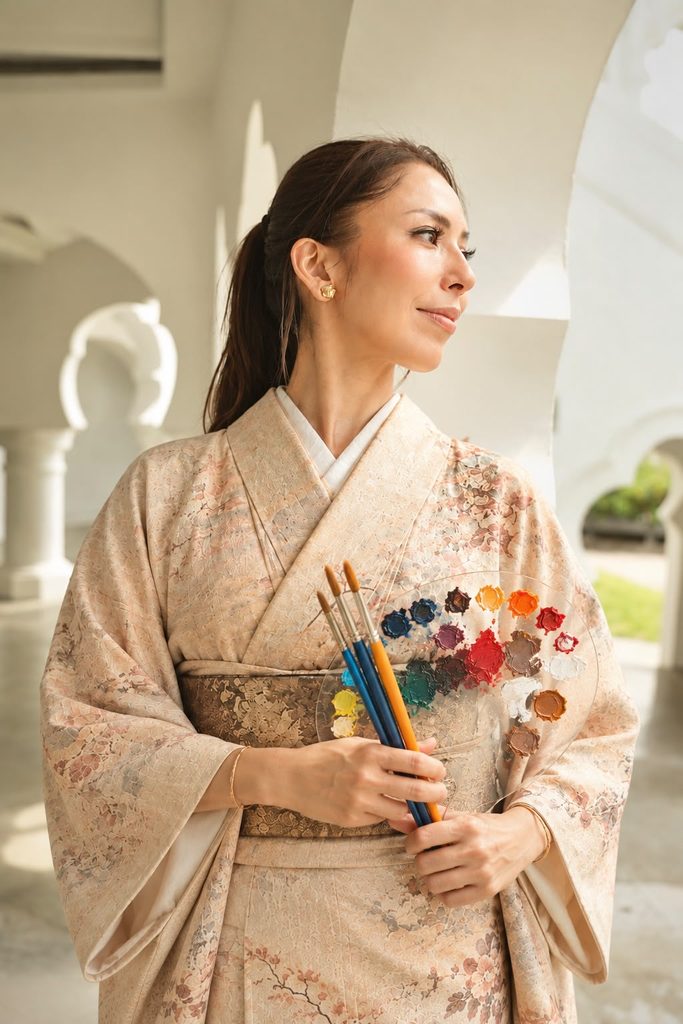
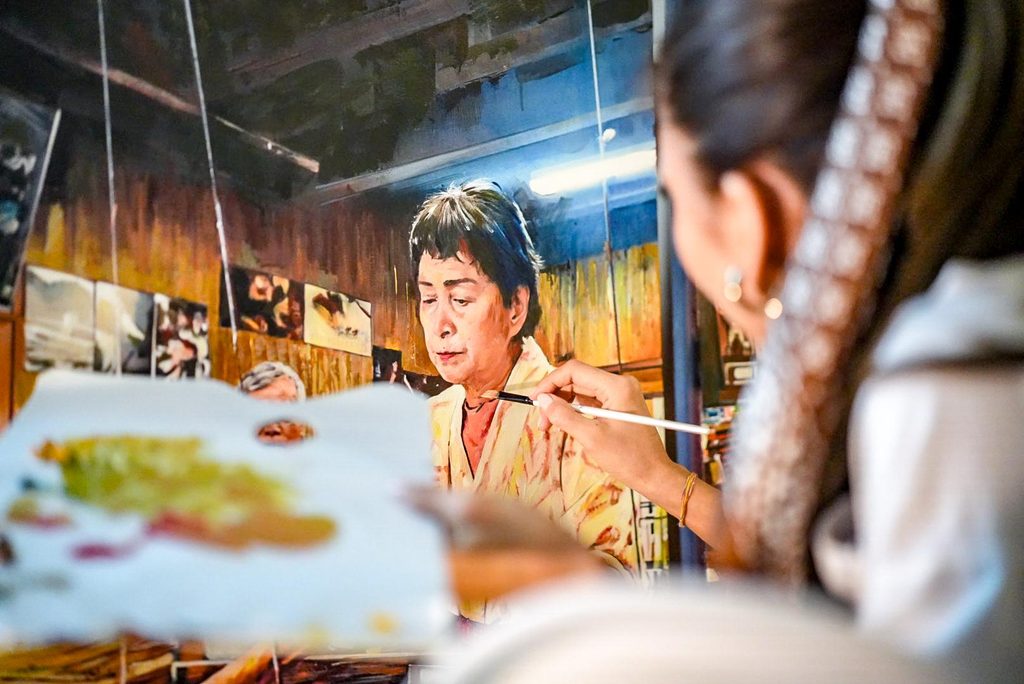
My encounter with Mino Takekami Workshop became the inspiration for a new painting, MINO WASHI – SUZUKI TAKEHISA & TOYOMI.
What stayed with me was the image of white fibres drifting through water. The movement of the frame in the Suzukis’ hands. Light passing through the paper. And beneath their calm expressions, the sense of responsibility that comes with carrying a tradition forward.
I wanted to preserve these moments within a single work.
Mino Washi is not shaped by human effort alone. The artisan accepts the movement of the water, observes the condition of the fibres and responds to the materials as they are that day.
Within each sheet lives the memory of water. The patience of time. The quiet devotion of human hands.
Watching Takehisa and Toyomi work reminded me that tradition is not only about preserving a form unchanged. It is also about passing on a way of observing nature, working with care and respecting the knowledge held within a material.
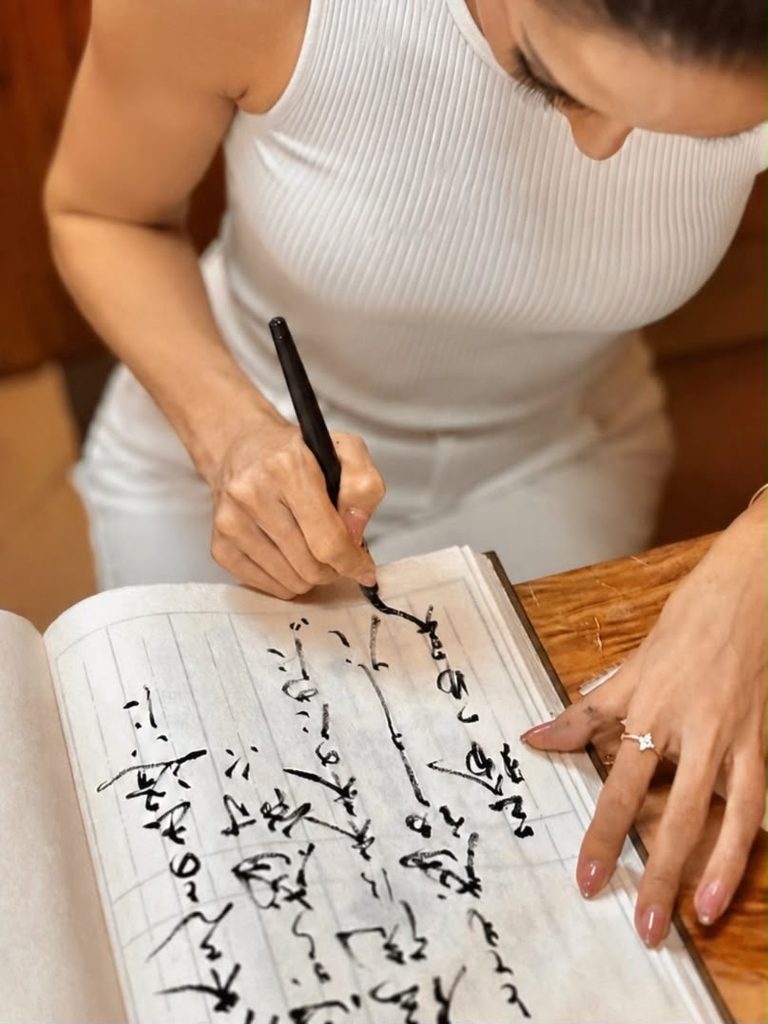
An Exhibition Connecting Twelve Cultural Memories from Japan and Singapore
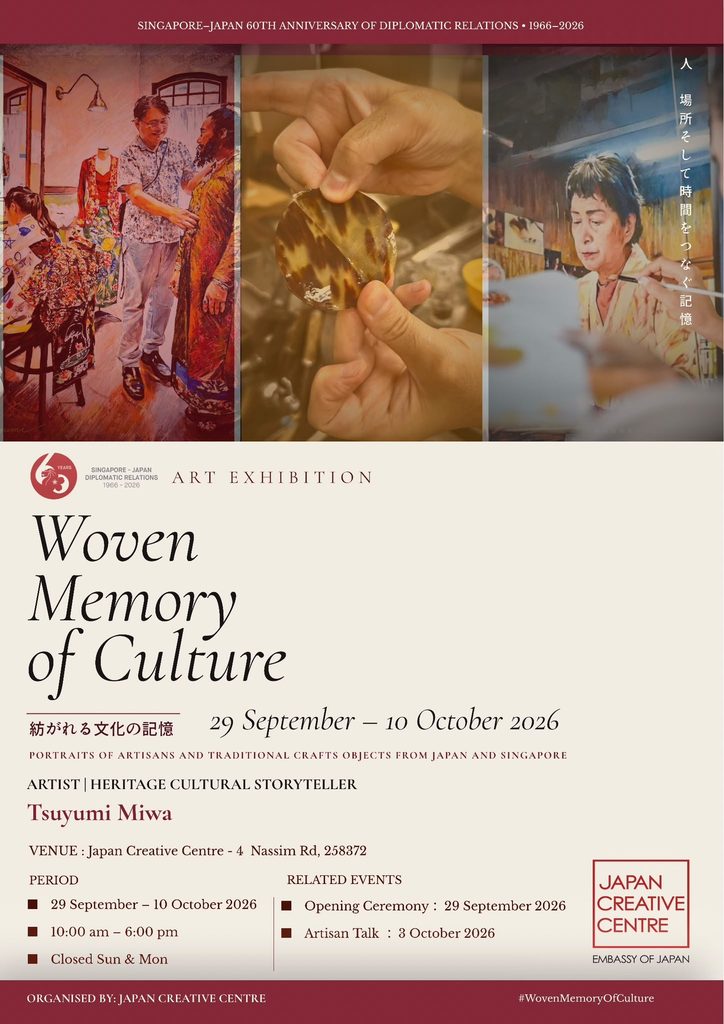
The work inspired by this visit will be presented in Woven Memory of Culture, an exhibition at the Japan Creative Centre in Singapore from 29 September to 10 October 2026. The exhibition marks the 60th anniversary of diplomatic relations between Singapore and Japan.
At its heart are twelve painted portraits of artisans and cultural practitioners: six works born from my journey through Japan and six inspired by encounters in Singapore. The paintings will be presented alongside traditional craft objects, artisan voices, documentary footage and QR-linked stories that reveal the people and processes behind each work.
Together, they create a visual conversation between two countries—different in landscape and tradition, yet connected by the people who carry culture forward.
I began this journey by looking at culture. But the more people I met, the more I realised that I was really looking at the individuals behind it: their gestures, their memories and the knowledge held within their hands.
A special event on 3 October will bring artisans from Japan and Singapore together through a talk, live demonstration and dialogue. The programme includes a closer look at bekko craftsmanship with Tsuyoshi Isogai, a live demonstration of traditional wagasa-frame making by Kengo Maeda, and a conversation with Tsuyoshi Isogai, Kengo Maeda and Kenry Peh, moderated by Professor Kaori Fushiki of Taisho University. Nanyang tea from Pek Sin Choon will also be served during the afternoon.
An invitation-only opening reception will take place at 6:00 pm on 29 September. Admission to the exhibition is free. The gallery is open from 10:00 am to 6:00 pm and closed on Sundays and Mondays.
Venue: Japan Creative Centre, 4 Nassim Road, Singapore 258372
Dates: 29 September–10 October 2026
Admission: Free
The Singapore culture I have encountered through Voyage and the Japanese traditions I have explored through An Artist’s Journey Through Japan will now meet in a single space.
Different people, different places and different forms of craftsmanship—brought together through the memories held within their work.
On the next full moon, I will return with another story from Japan. I hope you will join me.